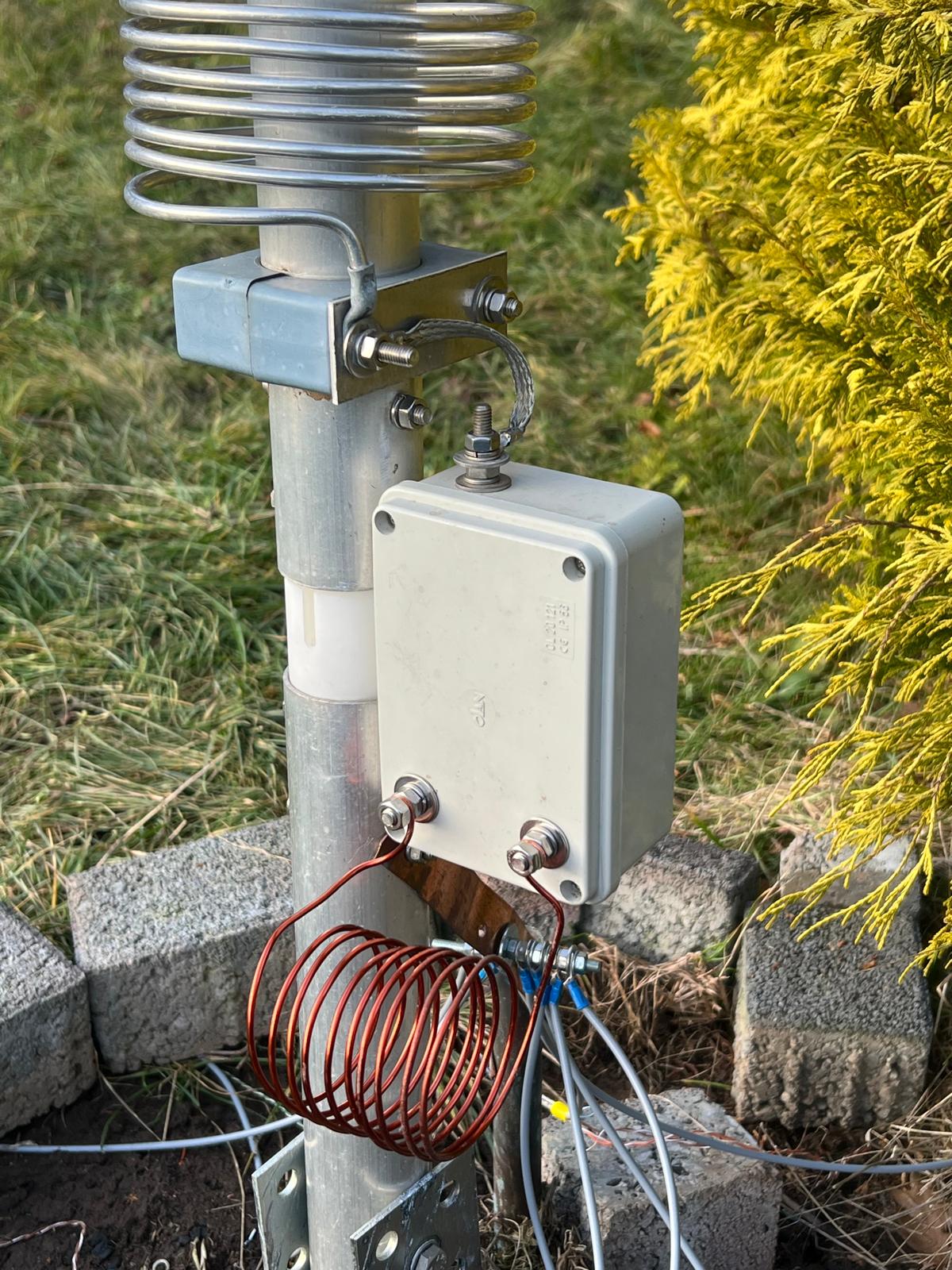
If you have a garden but want to keep a “low profile”, a Ground-Mounted Vertical is your best friend. It’s almost invisible from a distance, but with a good radial system, it can be a DX machine!
1. Why mount it on the ground?
Mounting an antenna at ground level (on a short stake or tripod) has several advantages:
- Stealth: It’s easy to hide among trees or bushes.
- Safety: Easier to install and maintain without climbing ladders or roofs.
- Low Angle: Perfect for long-distance (DX) communication.
2. The Secret: The Radial System
When a vertical antenna is on the ground, the earth is not a good enough conductor. You need to create a Return Path for the RF current.
- Surface Radials: Wires laid on the grass. You can use lawn staples to keep them down.
- Buried Radials: Wires buried just 2-5 cm under the soil. After a few weeks, the grass grows over them and they become invisible.
3. How many radials?
The “magic number” doesn’t exist, but here is a rule of thumb:
- 4-8 radials: Better than nothing, but the antenna will be inefficient.
- 16-32 radials: The “sweet spot” for great performance.
- Length: They don’t need to be resonant if you have many. About 1/8 to 1/4 of the wavelength is fine.
4. Deepening and Technical Resources
- N6LF – Radial System Measurements: Rudy Severns is the world expert on ground systems. His site is a goldmine of data.: Check out how to use a simple “fishing pole” as a temporary ground-mounted vertical!
- I4EWH Vertical antenna: an example of a large (not very invisible) vertical antenna mounted on the ground for 160 m band.
Pro Tip: Don’t worry about expensive wire for buried radials. Any thin, insulated copper wire will work. The soil protects it from UV rays, so it will last for years!
Next Step: Now that we have covered the most common antennas, how do we protect our equipment? In the next pill, we will talk about Lightning Protection and Grounding – because safety comes first!