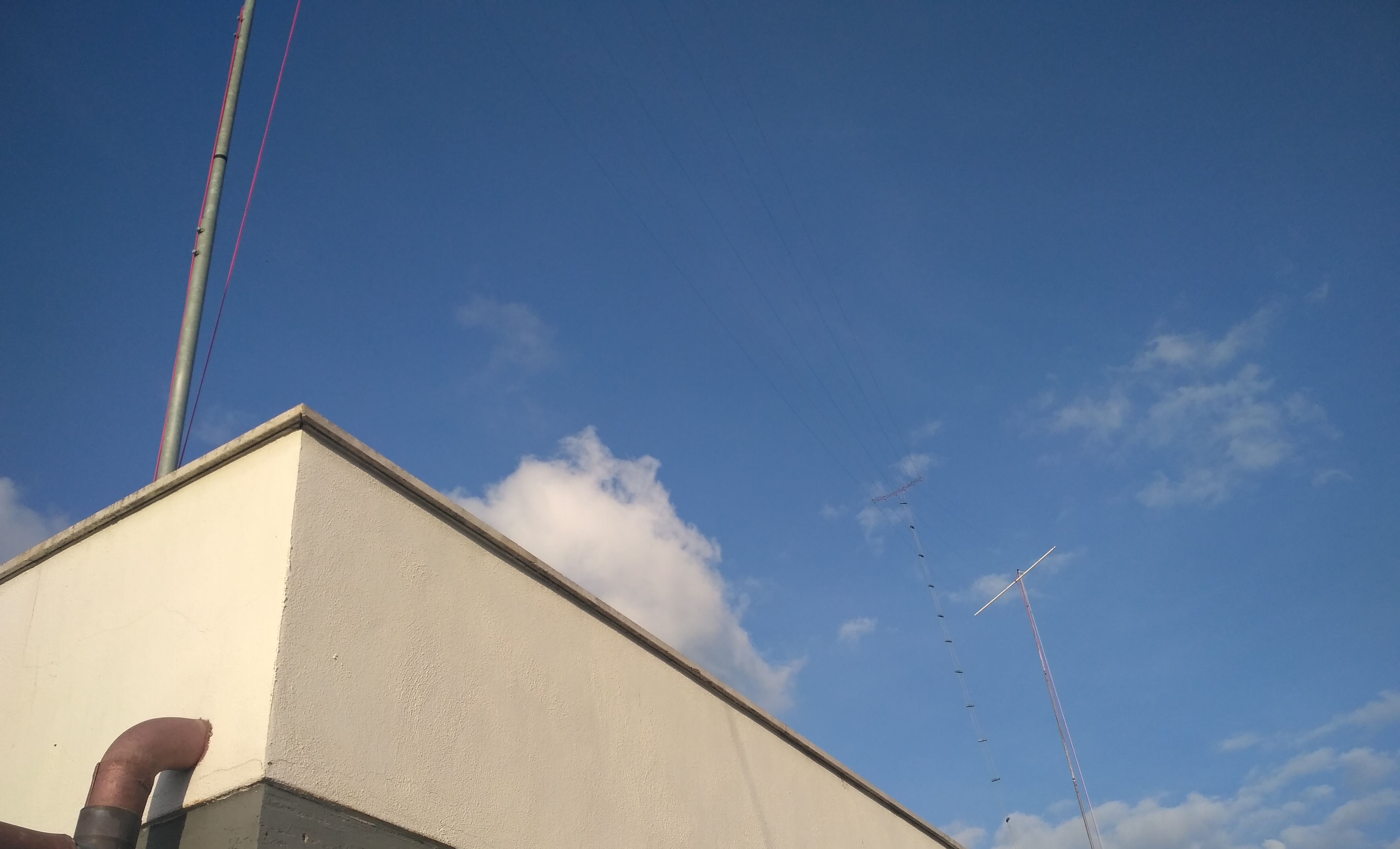
From the original post in Italian dated 8 December 2018. I invite you to watch the evolution of the system in this video with English subtitles.
After several years of satisfying experimentation with MF and LF bands—transmitting with an inverted L about 10 meters high and 16 meters long, made of six parallel wires—I decided it was time to put my brand new FT-991A to better use across all bands.
I decided to perform a substantial modification to my MF TX antenna without completely altering its electrical function. The goal was to ensure that, once modified, it would still perform efficiently without additional losses on the 630-meter and potentially the 2200-meter bands.
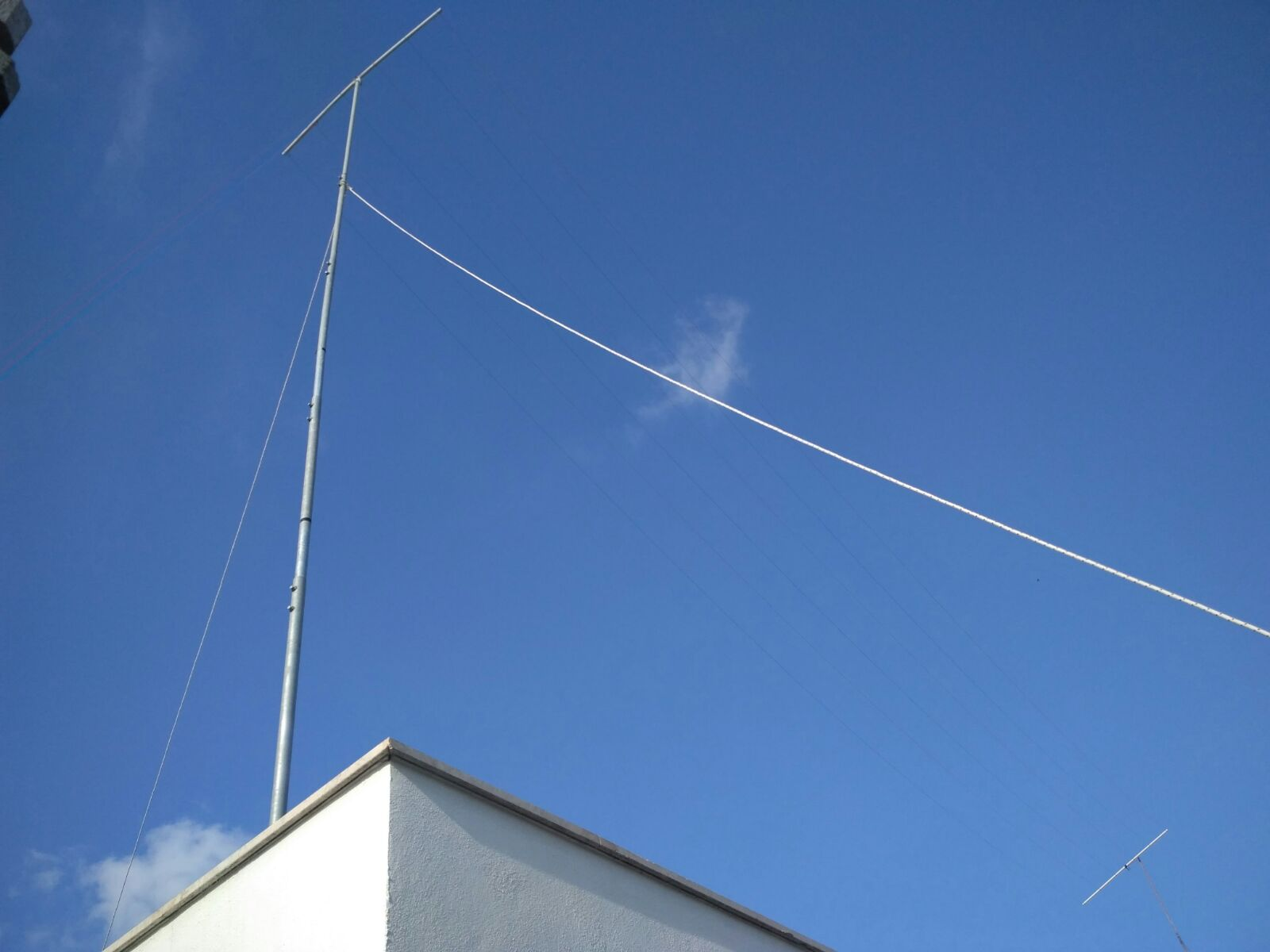
Maximum Performance with Limited Space
The setup is essentially a “condo-friendly” antenna, provided you have at least twenty meters of terrace. For grounding, I used all available metal structures and a ground rod located two floors below.
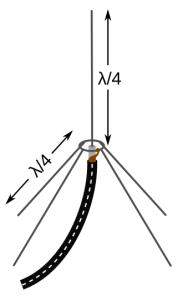
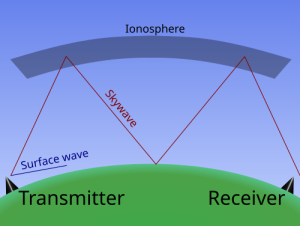
The core of the modification was transforming the Inverted-L into a T-antenna, but with some unique characteristics. As we know, a dipole installed in a typical apartment building performs decently from 10 meters down to a certain point. However, below 7/5 MHz, ground height and RF characteristics begin to require vertical polarization to reduce absorption from the ground and surrounding objects. An 8-meter height is simply insufficient for a dipole on 80 or 160 meters (where it would be less than 1/8 wavelength long). A short, low dipole is mostly useful for local or European NVIS (Near Vertical Incidence Skywave) QSOs.
Conversely, a very long vertical on higher frequencies might have higher theoretical gain, but its radiation angle would be too high, wasting RF energy in directions useless for DXing.
The Idea: A Hybrid G5RV / Top-Loaded Vertical
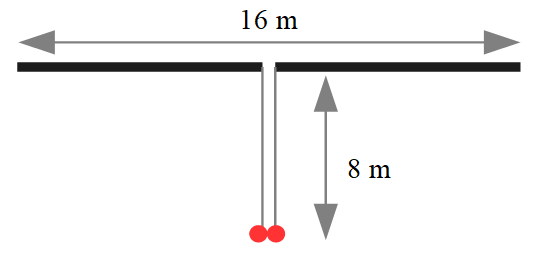
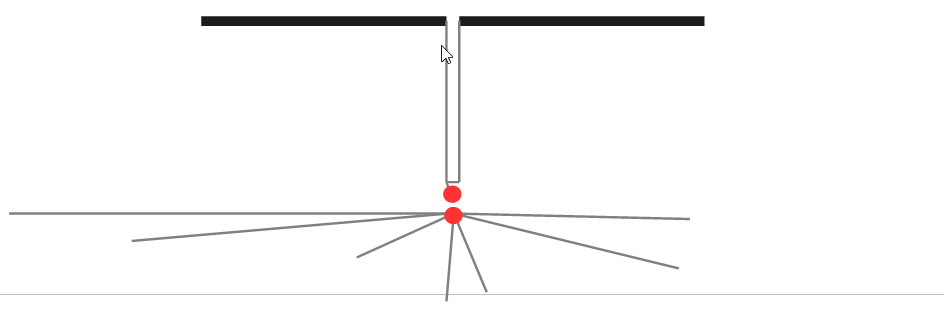
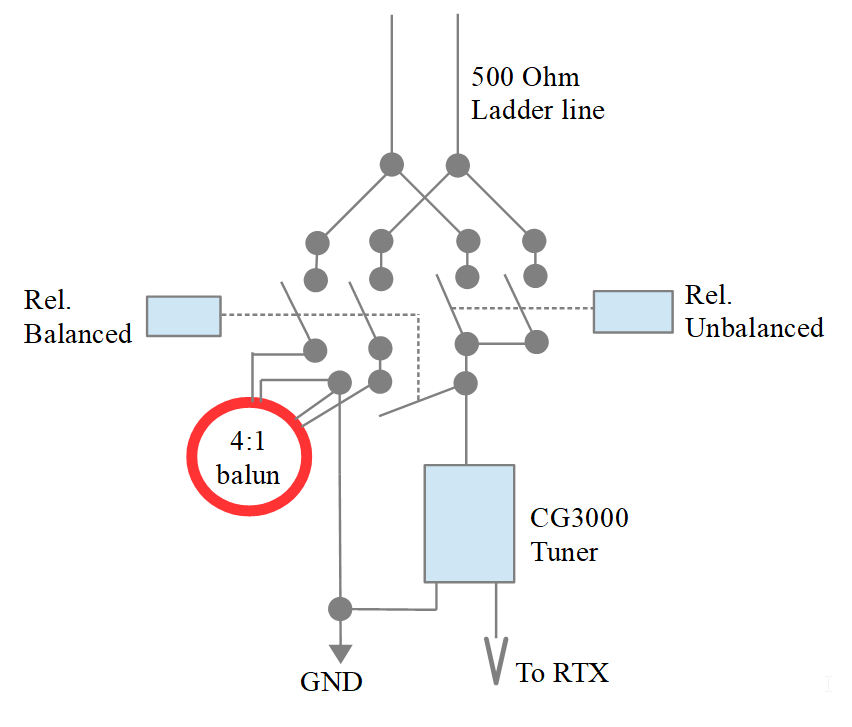
I realized it would be interesting to feed the antenna with a twin-lead (ladder line) so that I could switch the feed point at the station. This allows the antenna to operate as a “fat” G5RV-type dipole in one configuration and a heavily top-loaded vertical in the other.
- Configuration 1: G5RV dipole with balanced line feed
- Configuration 2: Vertical antenna with a large capacitive hat.
Technical Implementation
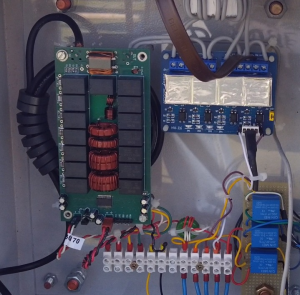
Initially, I considered using two separate tuners: a CG3000 automatic tuner for the vertical mode and an S-Match balanced tuner for the dipole. Then came the “stroke of genius”: What if I put a 4:1 balun at the output of the CG3000?
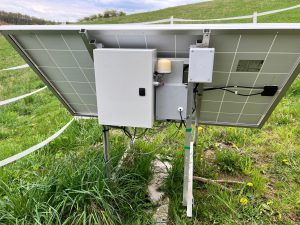
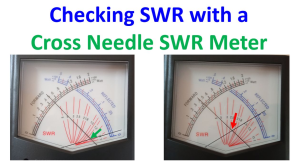
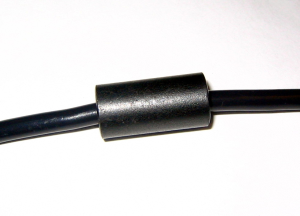
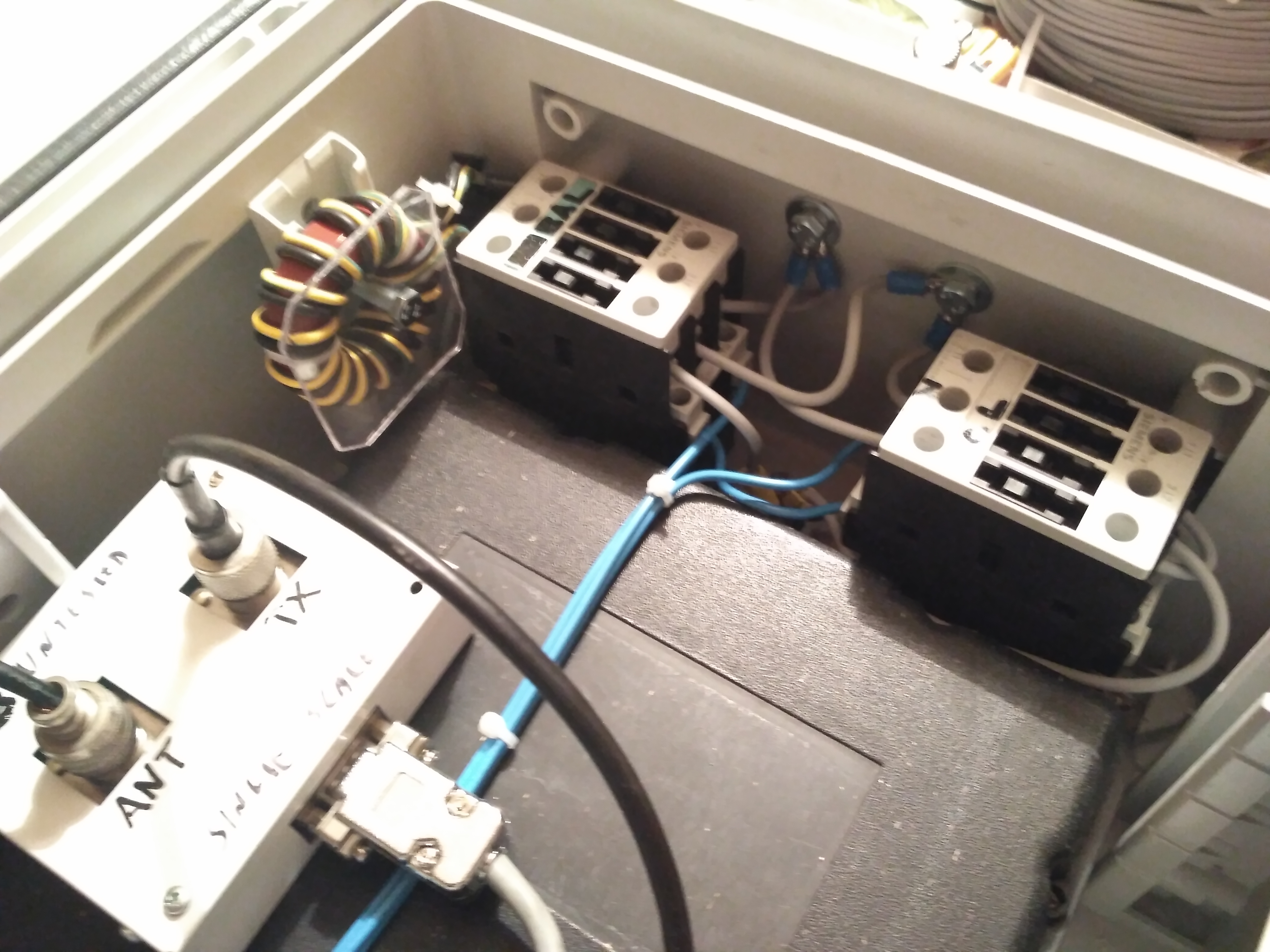
I used a T200-2 toroid, which is more than enough for 100W without reaching saturation. I housed everything in a waterproof fiberglass box. I also included a remote SWR bridge inside the box to read SWR and power directly at the tuner. A series of toroids on the cable (following advice from Tim, K3LR) helps prevent common-mode currents and reduces noise.
For switching, I used a pair of large 24VDC Siemens contactors. These allow multiple switching paths with a single command and provide high isolation—crucial for when I add external tuning (variometers and loading coils) for MF and LF, where extremely high voltages are generated.
Construction Details
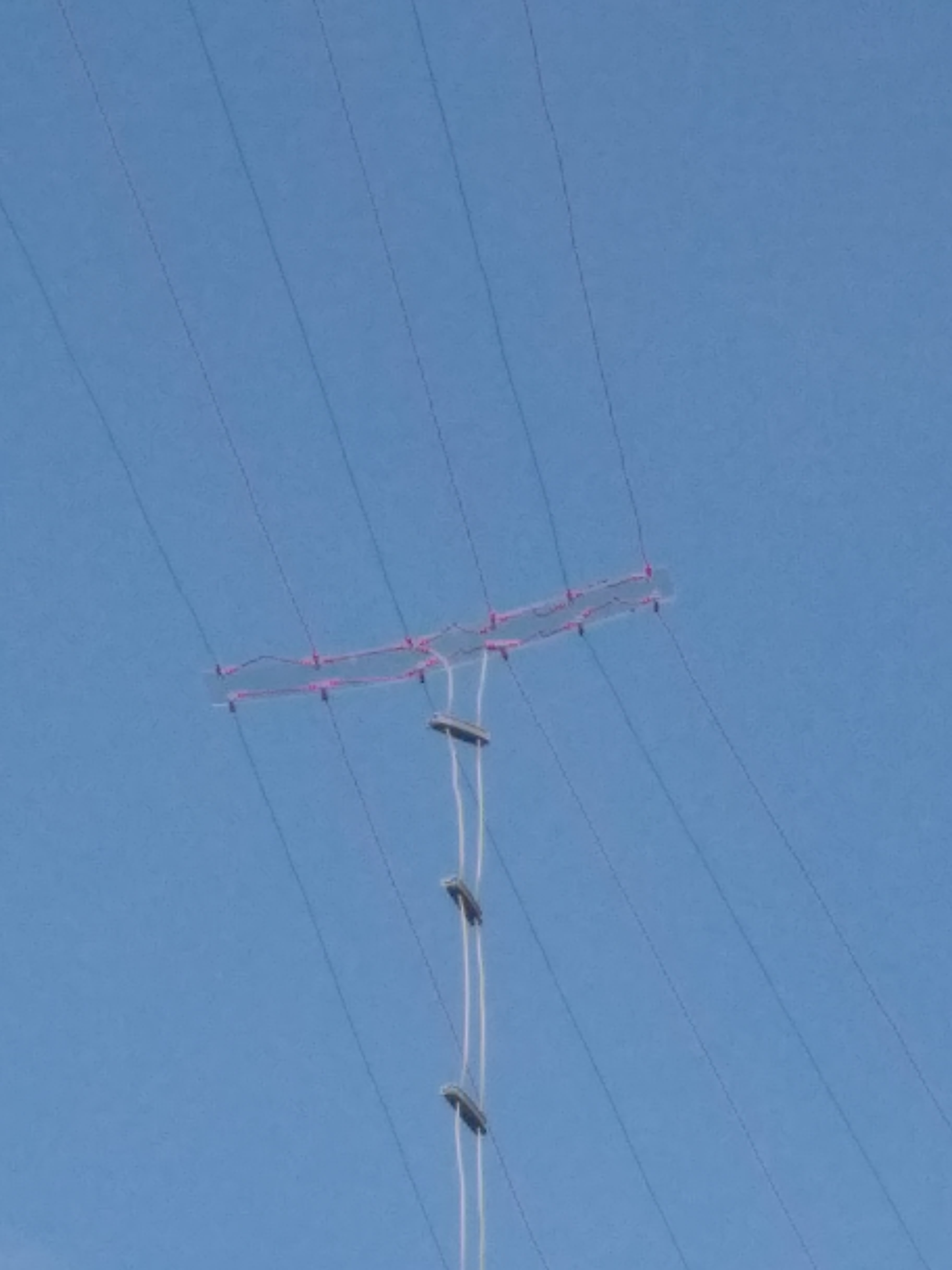
The ladder line is home-built. To optimize MF operation, I chose a 500 Ohm impedance with a spacing of about 42mm between the 1.5 sq mm wires. I used plastic spacers to maintain the width.
The antenna center is made of Lexan, where the 12 wires of the original capacitive hat converge. These wires were split into two groups (6+6) to form the dipole legs.
Operating Experience
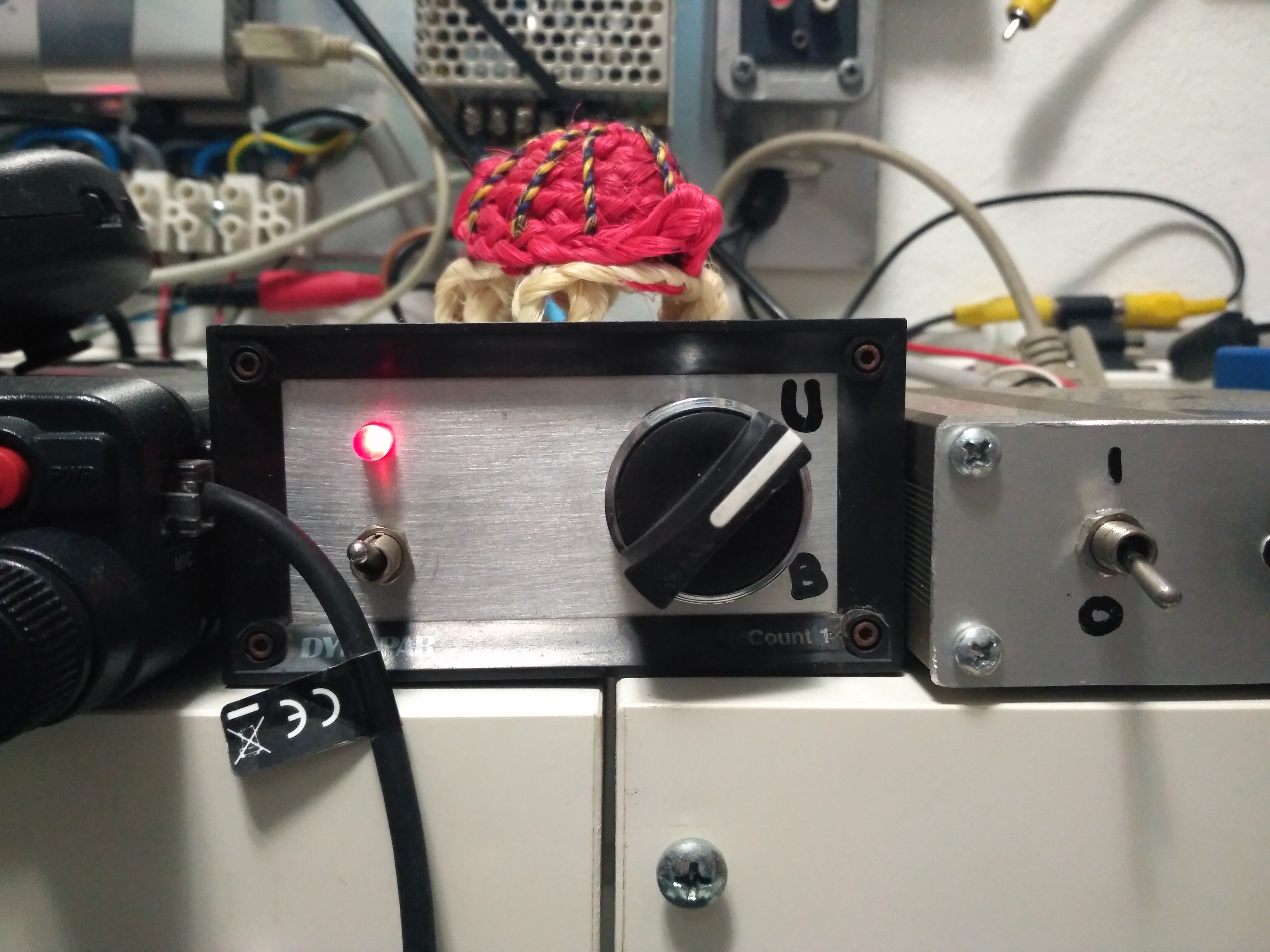
I use a selector switch to toggle between “Balanced” and “Unbalanced” modes.
- When off: The antenna is completely isolated.
- Safety Tip: I recommend adding flyback diodes in parallel with the contactor coils to prevent inductive spikes that could interfere with the radio or damage the power supply.
The 4:1 balun (T200-2 with 17 bifilar turns) allows the CG3000 to handle balanced loads and lowers high impedances that might otherwise exceed the tuner’s range.
Field Results:
- Vertical Mode: Tunes from 160m to 6m. It excels in DX on lower bands but loses some efficiency on higher bands compared to the dipole. Noise floor is higher, but signals are often stronger for DX.
- G5RV Mode: Works best from 6m down to 30m. It is difficult to tune on 80m and sometimes 40m, likely due to the 4:1 balun limiting low-impedance matching. This mode offers a much lower noise floor (less QRN).
Final Note: Since the tuner needs to “re-learn” the match every time the antenna mode is switched, I have decided to use the Dipole from 6m to 30m and the Vertical from 40m to 160m. This makes frequency changes much faster.
I will continue to update you on the pros and cons of this “strange” antenna as I refine the design.