You built the dipole, you added the Balun, and the SWR is finally 1:1. But is your signal actually reaching the antenna? Not all cables are created equal. Let’s talk about Coaxial Cables and Attenuation.
1. What is Attenuation?
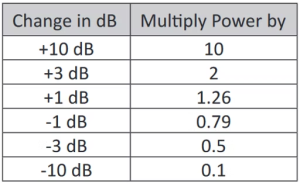
Every cable has a certain amount of “resistance” to the RF signal, which we call Loss or Attenuation. This loss is measured in dB (Decibels).
The rule is simple: the longer the cable and the higher the frequency, the more power you lose as heat before it even reaches the antenna.
2. RG-58 vs. RG-213: Which one to choose?
In the ham radio world, you will often hear about these two “classics”:
| Cable Type | Diameter | Flexibility | Best for… |
| RG-58 | ~5 mm | Very High | Short runs, portable use, QRP (low power). |
| RG-213 / RG-8 | ~10 mm | Low | Base stations, long runs, high power. |
The Tip: For a 20-meter dipole, if your cable is longer than 20 meters, avoid thin cables like RG-58 and look for “Low Loss” alternatives (like Ultraflex or RG-213).
3. The “Silent Thief”: Heat
When a cable has high attenuation, the RF power that doesn’t reach the antenna is transformed into heat. If you use a thin cable with a high-power amplifier, you could literally melt the internal dielectric!
4. Deepening and Technical Resources
- Coax Loss Calculator: An essential tool by Times Microwave. Plug in your frequency and cable length to see how many Watts you are losing.
- Messi & Paoloni – Coax Guide: A great resource (often in Italian and English) to compare modern high-performance cables.
- Wikipedia – Coaxial Cable: For those who want to study the math and the “Velocity Factor”.
Pro Tip: Beware of “mystery” cables! Always check the specs. A high-quality cable might be more expensive, but it’s the best investment for your station. It’s better to have 50 Watts at the antenna with a good cable than 100 Watts at the radio with 50 Watts lost in a bad one!
Next Step: Your station is now physically ready. But when should you turn on the radio? In the next pill, we will explore the mystery of Ionospheric Propagation: when is the “band open”?