A common mistake for beginners is thinking that “ground is ground.” In your shack, you actually have two different systems that must work together but serve different purposes.
1. Electrical Ground (Safety)
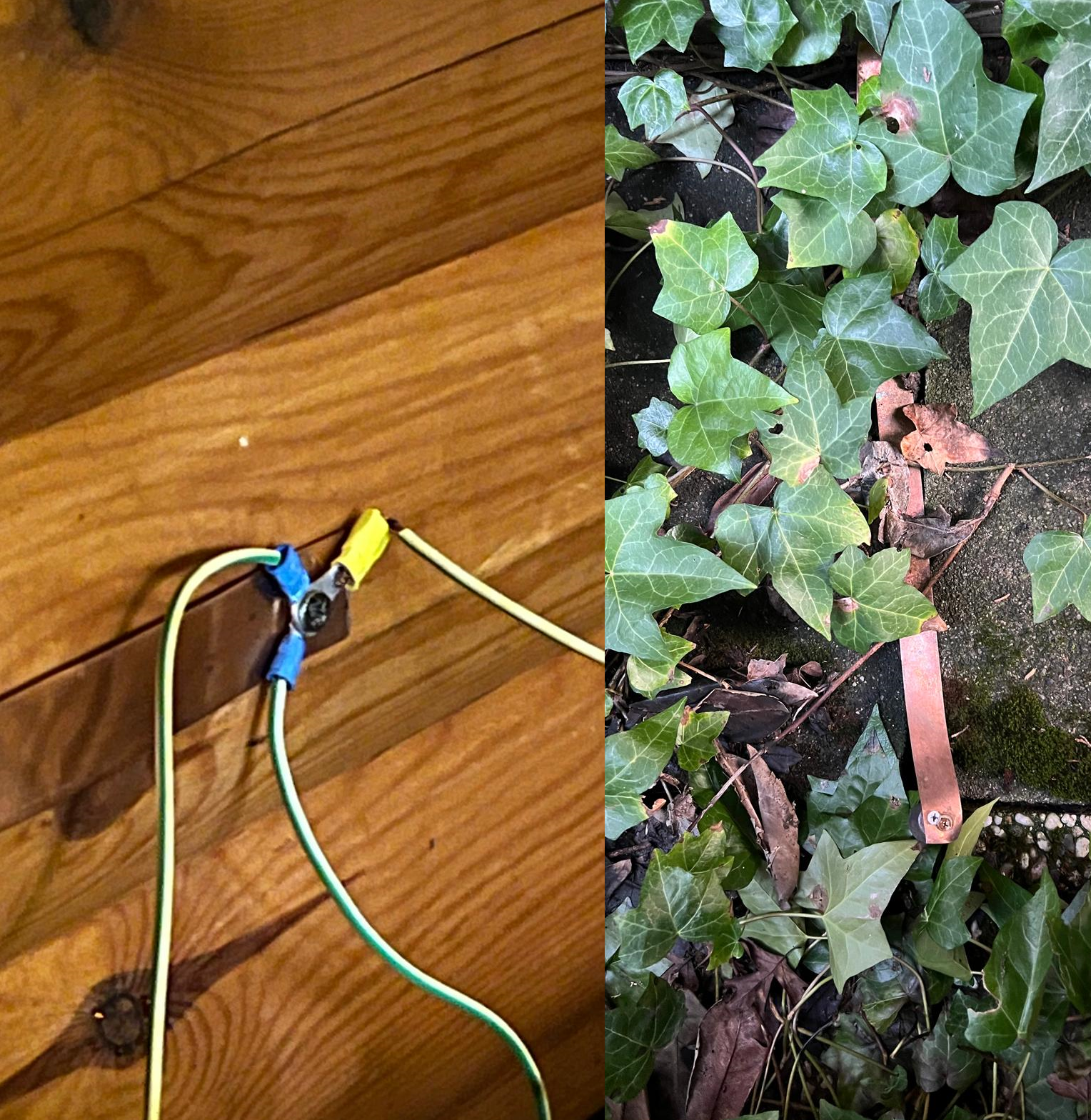
This is the yellow/green wire in your wall socket. Its only job is safety: if a power supply fails, it directs the 230V to the earth to prevent you from getting an electric shock.
- Warning: It is a poor ground for radio signals because the long wires inside your house act as antennas, picking up noise from LED lights and computers.
2. RF Ground (Performance)
This is the system that provides a “counterweight” to your antenna signal.
- The Goal: To keep the radio chassis at “zero” RF voltage.
- The Benefit: It reduces “RF in the shack,” prevents your microphone from biting your lips (RF burns), and significantly lowers the background noise in your receiver.
3. How to improve your RF Ground
- Keep connections short and wide. RF travels on the surface of wires (Skin Effect), so a flat copper braid is much better than a thin round wire.
- Connect all your equipment (radio, tuner, amplifier) to a single copper bus bar, then lead that bar to an external ground rod.
4. Deepening and Technical Resources
- W8JI – Station Grounding: The most detailed technical explanation on why “daisy-chaining” your grounds is a bad idea.
- ARRL – Grounding and Bonding: A great overview of how to integrate safety, lightning, and RF grounding.
Pro Tip: If you have high noise (QRM) from your house, try to power your radio from a battery for a moment. If the noise disappears, your Electrical Ground is bringing interference into your radio!