If the Dummy Load is a “fake antenna,” the SWR Meter is the doctor’s stethoscope. It tells you if your radio is “breathing” correctly or if it’s struggling against a wall of reflected energy.
1. What does it actually measure?
SWR stands for Standing Wave Ratio. When your radio sends power (Forward Power) to an antenna that isn’t perfectly matched, some of that power “bounces back” (Reflected Power). The meter compares these two values.
- 1:1 – Perfection. All power goes to the antenna.
- 1.5:1 – Very good. Normal for most antennas.
- 3:1 – Danger zone. Your radio starts to get hot and might reduce power to protect itself.
2. Cross-Needle vs. Single Needle
- Single Needle: You have to “calibrate” it every time you change power or frequency. It’s classic but a bit slow.
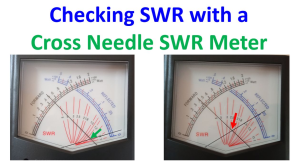
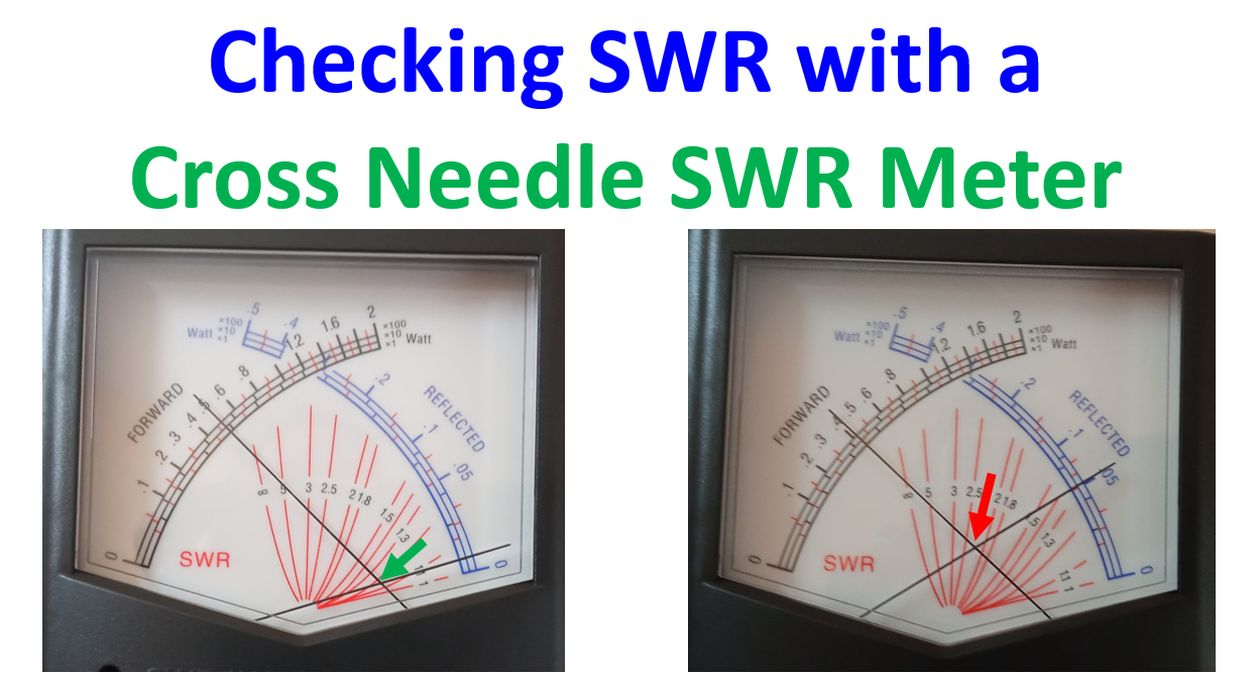
- Cross-Needle: The “King” of the shack. One needle shows Forward power, the other shows Reflected power. Where they cross on the scale is your SWR. No calibration needed!
3. Where to put the meter?
For the most accurate reading of your antenna, place the meter at the antenna feedpoint (difficult!). For the safety of your radio, place it right at the transmitter output.
Note: If you use an antenna tuner (ATU), the SWR between the radio and the tuner might be 1:1, but the SWR between the tuner and the antenna could still be very high!
4. Deepening and Technical Resources
- ARRL – Understanding SWR: A clear explanation of what is happening inside the coaxial cable.
- W2DU – Reflections: For the real “hardcore” techies, Walter Maxwell’s work is the definitive guide on reflected waves.
- SWR Calculator Online: To calculate the exact percentage of power lost due to reflection.
Pro Tip: Don’t obsess over a 1.1:1 SWR. The difference in signal strength between 1.2:1 and 1.5:1 is practically zero at the other end. If it’s under 2:1, stop tuning and start making contacts!
Next Step: We have the radio, the meter, and the antenna. But what if they don’t “speak the same language”? In the next pill, we’ll talk about the Antenna Tuner (ATU) – the diplomat of the shack.